Spring in a Scottish woodland…
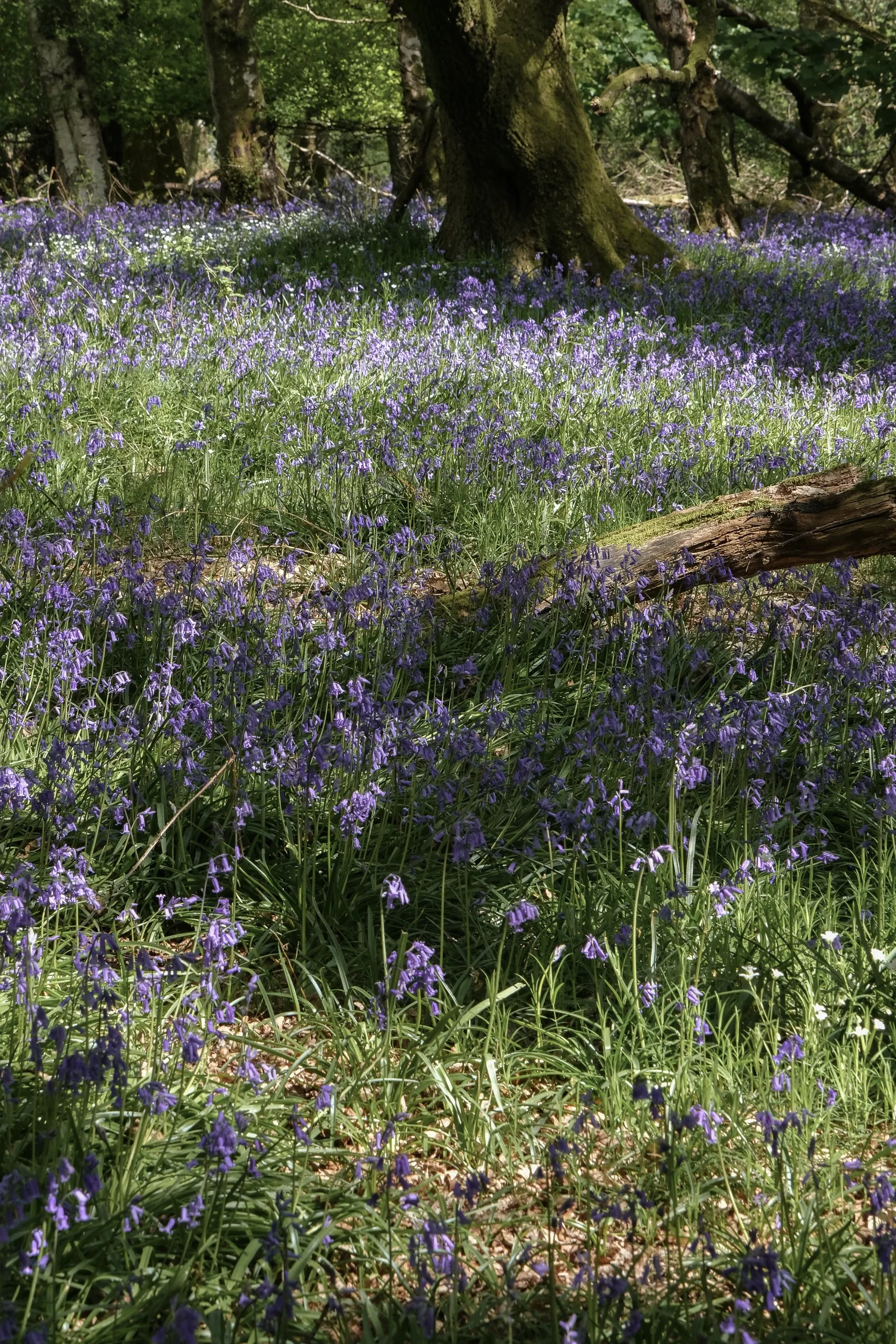
Spring in a Scottish woodland and its floor is carpeted in shades of blue, from deep violet-blue, as loved by Monet and other impressionist painters (possibly used in shaded areas of the canvas as a complementary colour for the yellow sunlight), to soft cerulean blue, the colour of the sky as used extensively by Picasso, especially during a period of grief when blue (in some cultures regarded as the colour of sadness) became the predominant colour he used.
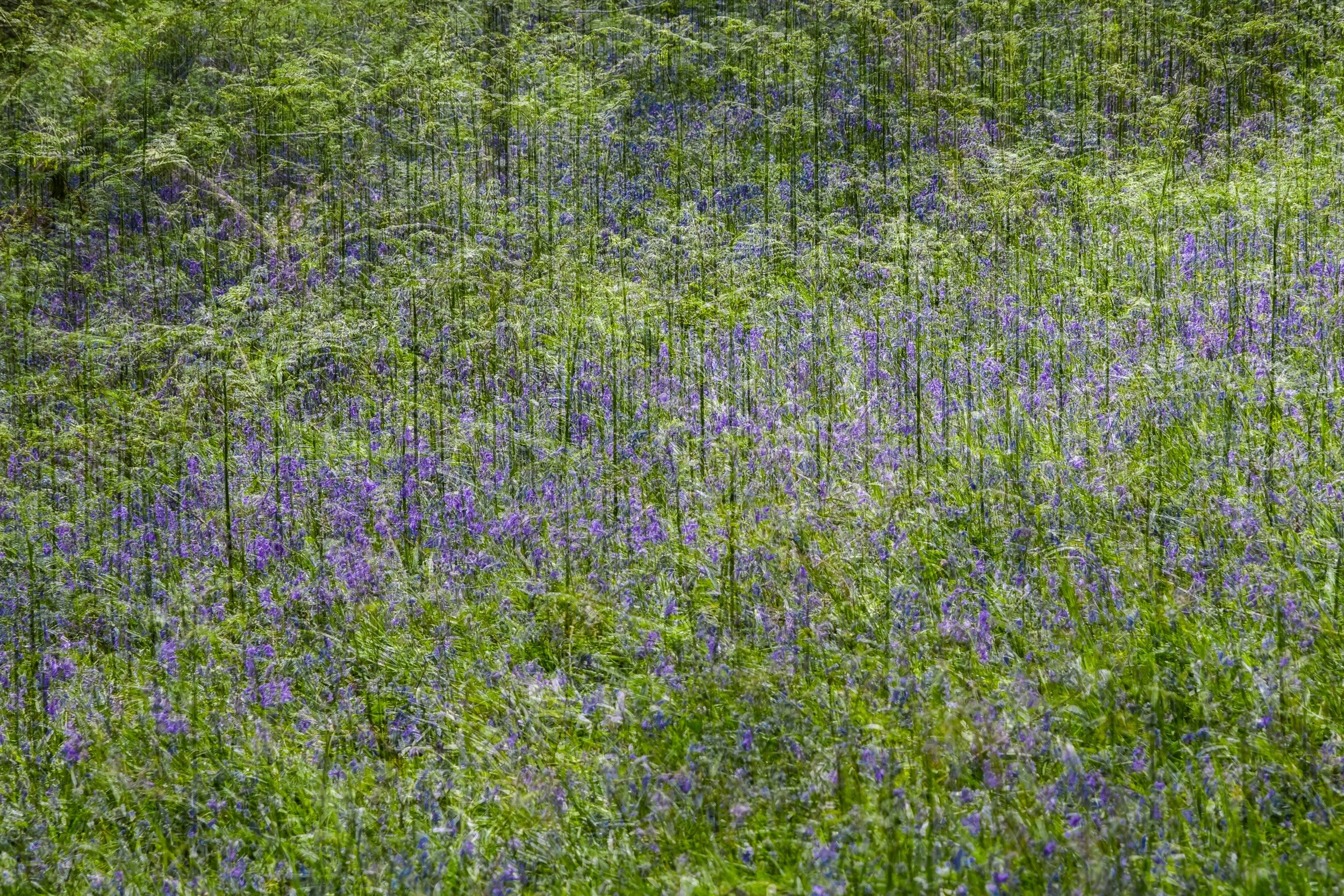
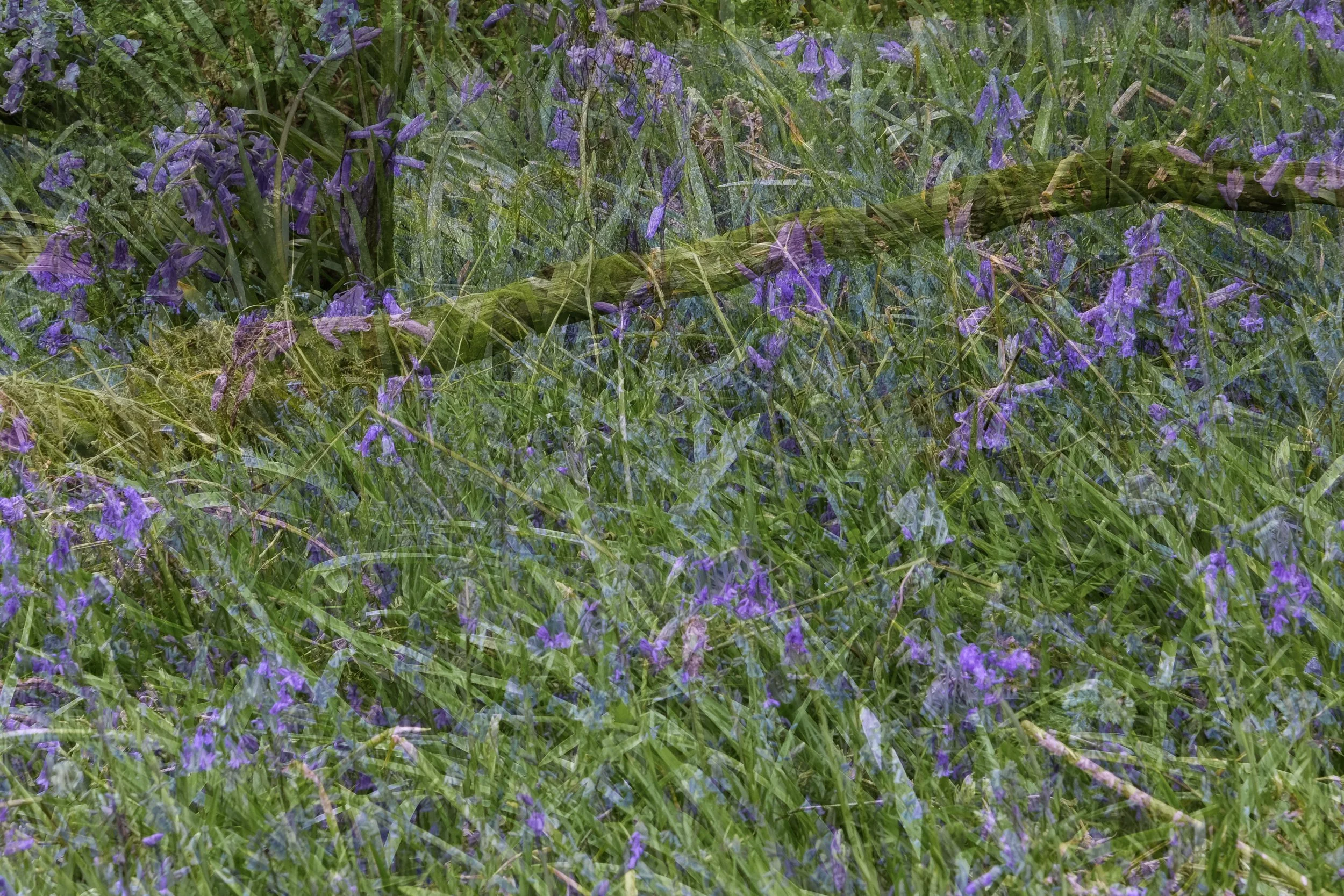
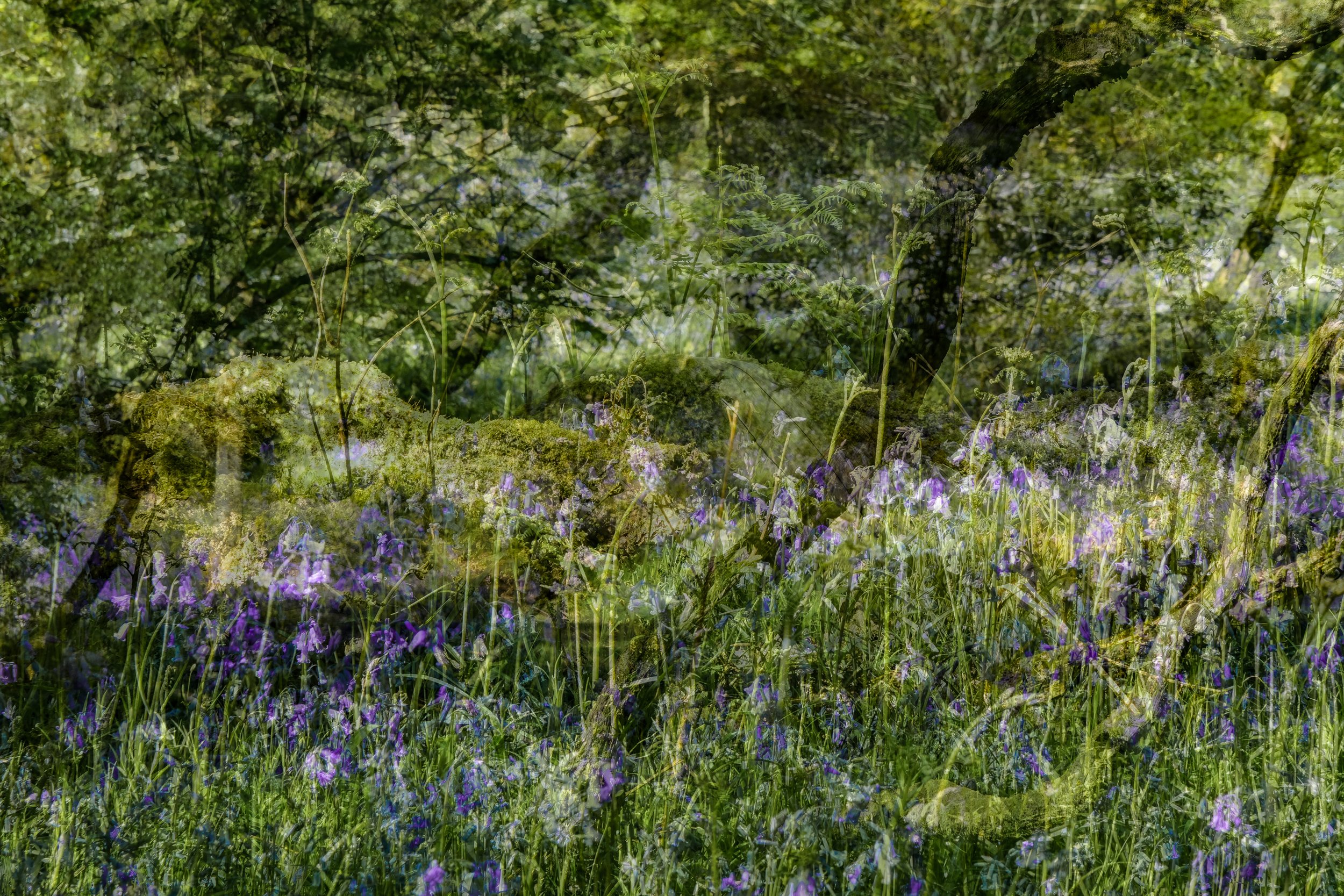
Here of course it is the mass of bluebells combined with the tapestry of dappled sunlight and scattered shade that creates the uplifting experience of being in the bluebell wood in May.
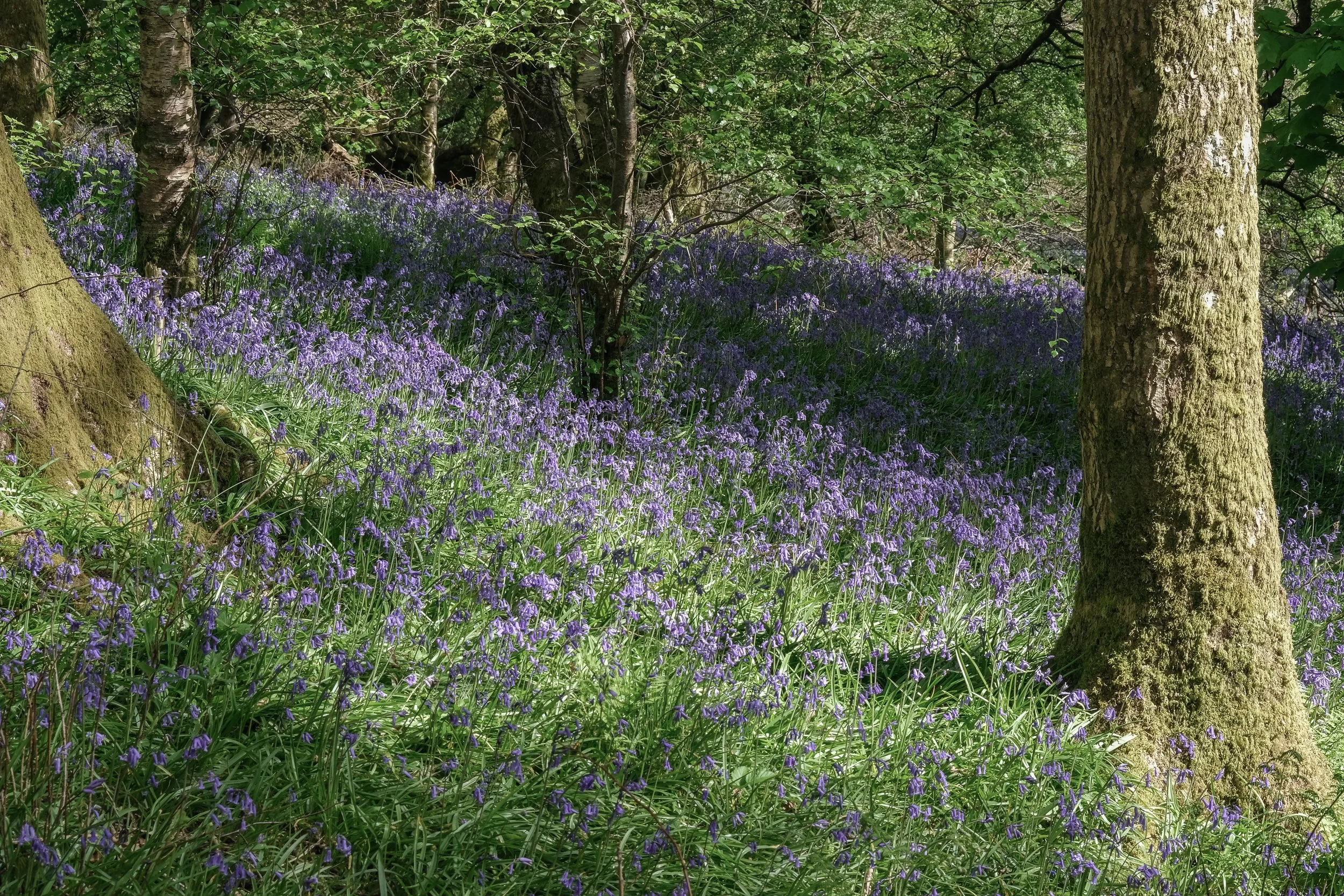
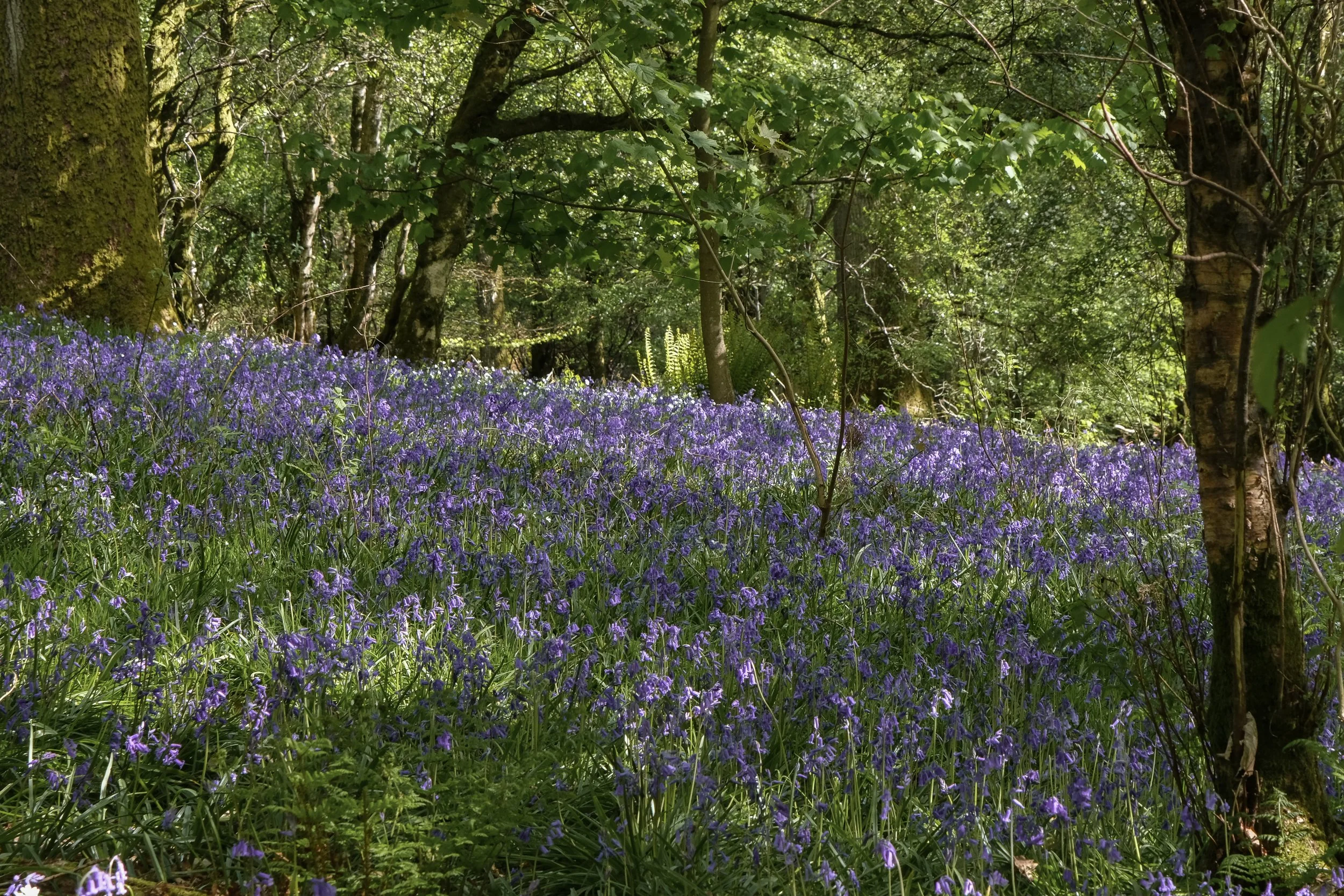
The English “Bluebell” (Hyacinthoides non-scripta) is known as “Wild Hyacinth” in Scotland, where its bulbs are widespread except in the Northern Isles. Its Gaelic name, ‘Bròg na Cuthaig’ means ‘Cuckoo’s Shoe’ after the slipper shape of the flowers (4-10) which hang from one side of the curved stem.
There is a Spanish “Bluebell” (Hyacinthoides hispanica) that is also found in central and east Scotland. Its flowers grow around an upright stem and it can hybridise with the English Bluebell creating a potential threat to the native bluebell’s survival.
The wildflower known as the Scottish “Bluebell” (Campanula rotundiflora) is very different and otherwise known as a “Harebell”. It has no bulb and is found on grasslands especially on sandy soils, flowering in the summer months. Its Gaelic name is ‘Currac-cuthaige’ meaning ‘Cuckoo’s-cap’, as its bell-shaped flowers more closely resemble tiny caps.
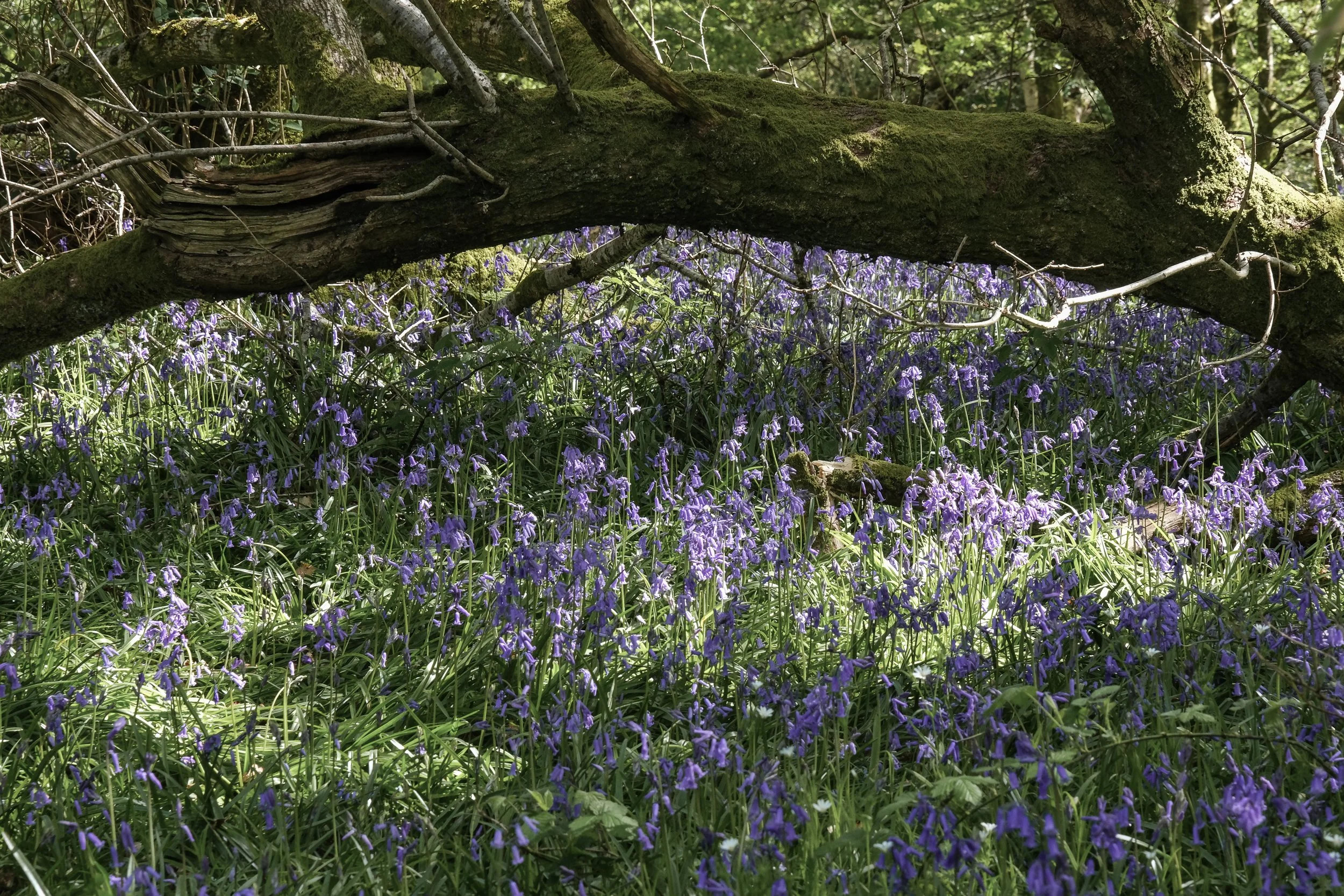
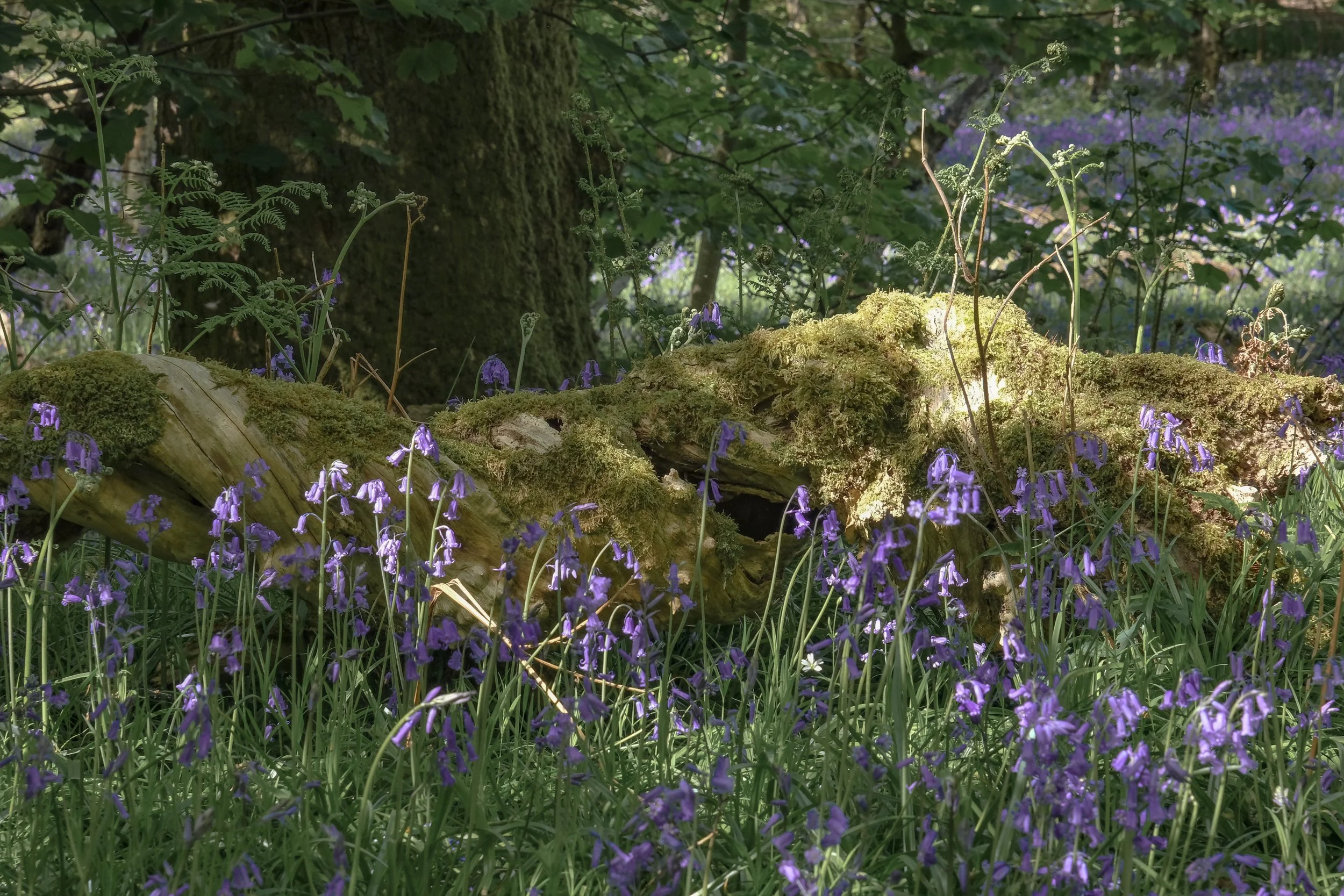
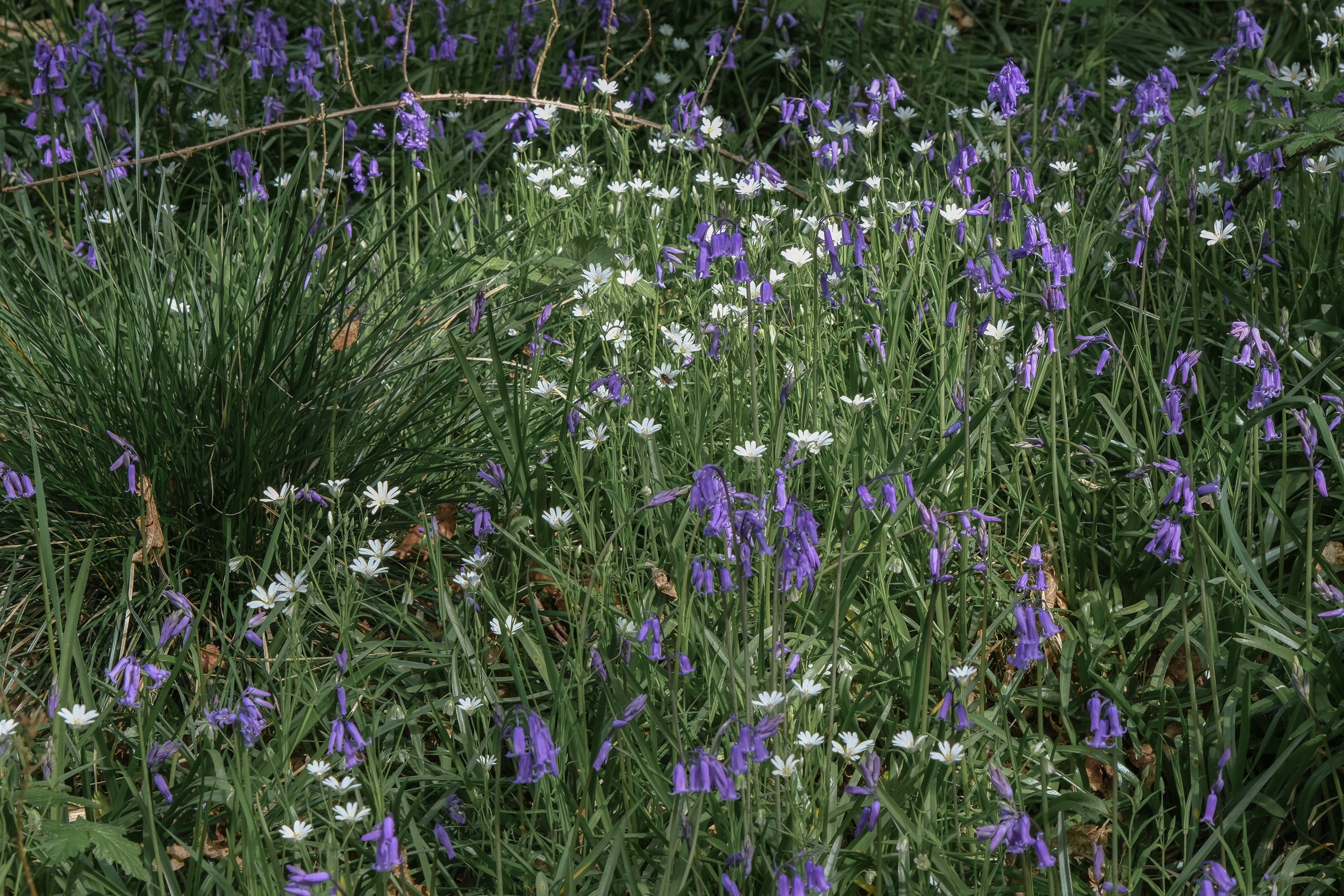
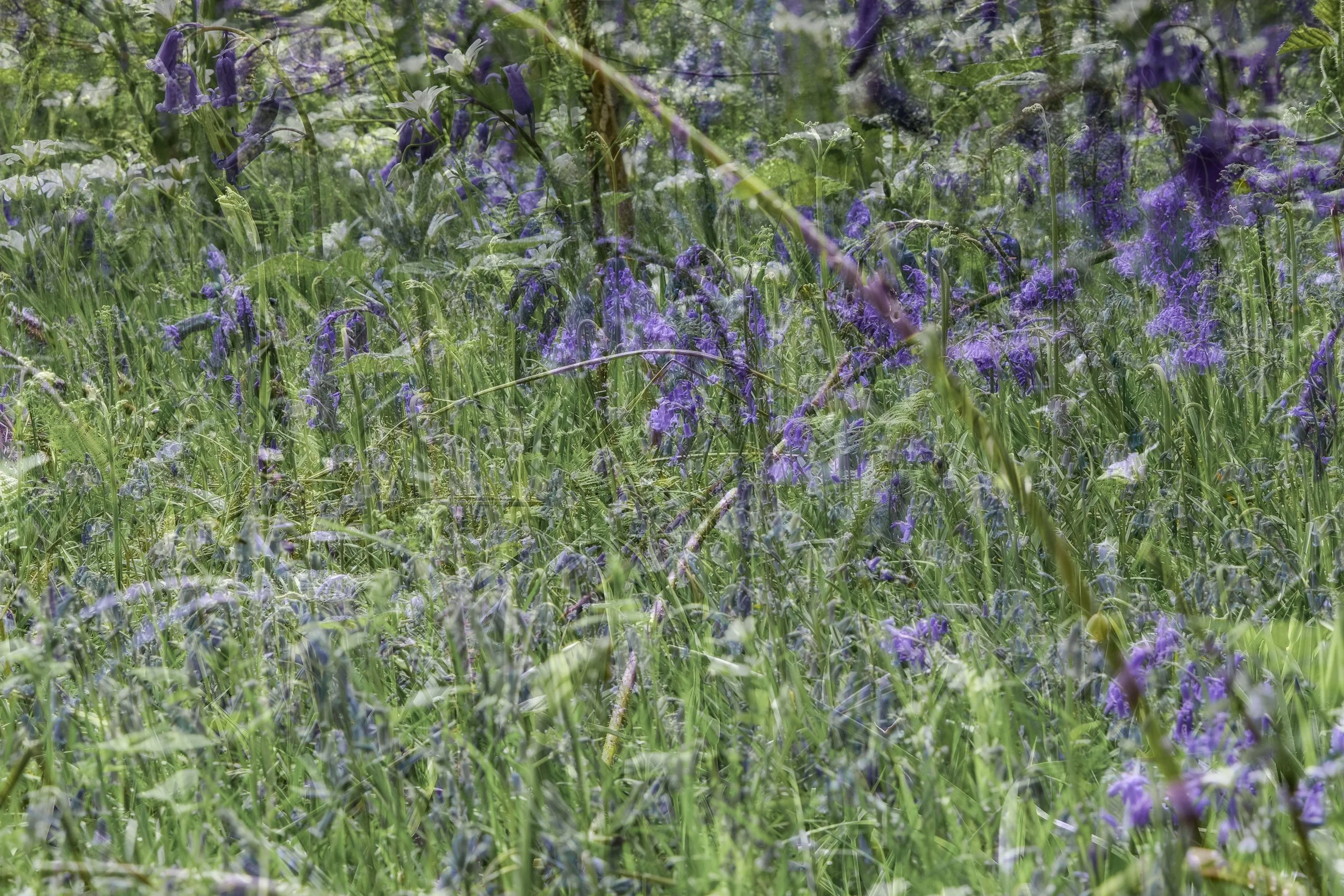
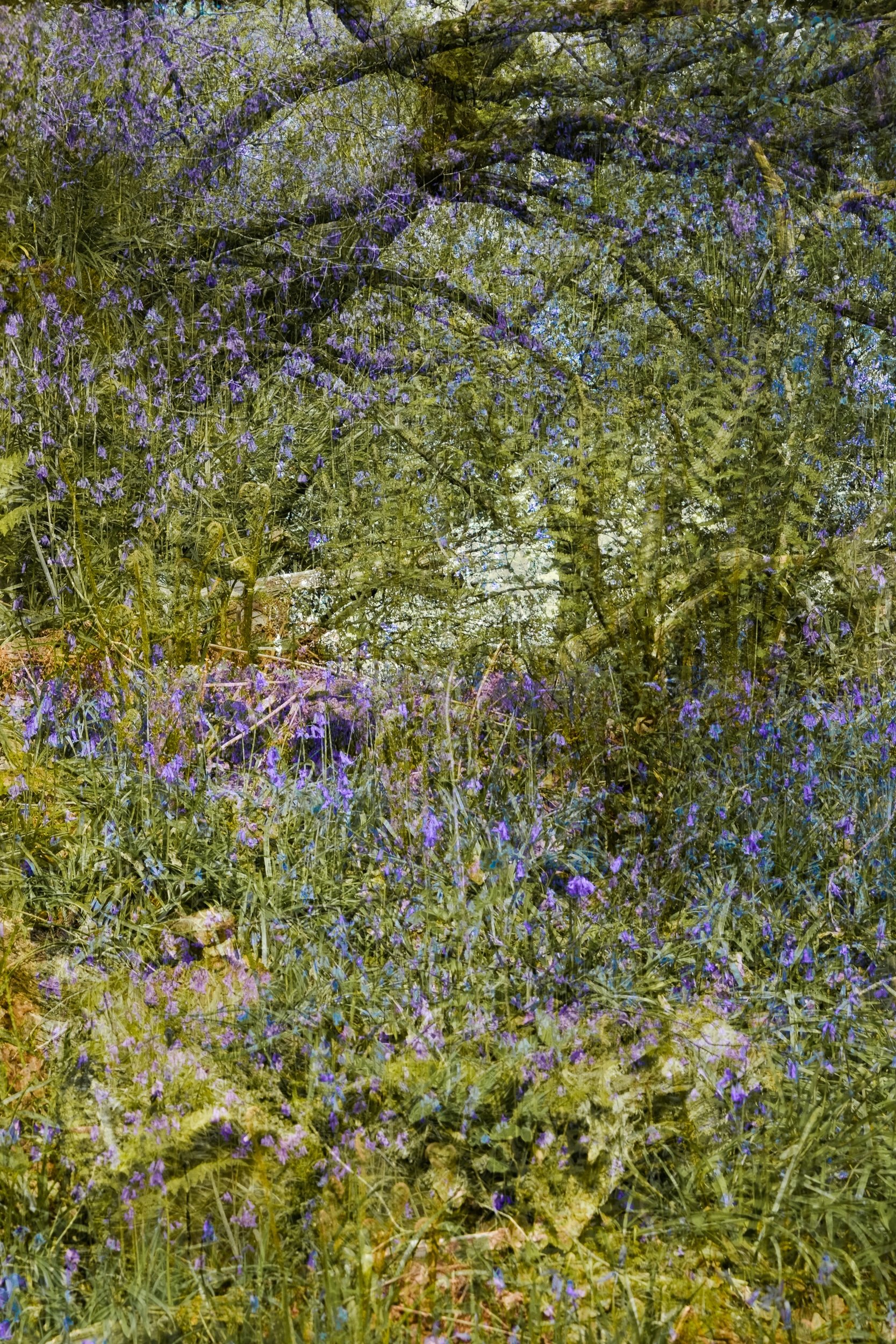
I’ve photographed the bluebells my local wood every Spring for many years. It’s always a joy to experience but sometimes the results are disappointing; it’s a difficult task to show them in their best form or intensity of colour. Often “en masse” they can look like a thin blue line overwhelmed by trees in leaf, ferns and fast-growing bracken. On this occasion in 2025, I renewed my efforts to capture their amazing presence and beauty by using a narrow depth of field or close-ups, endeavouring to take photographs through them rather than over them, excluding as much of the sky as possible and contrasting the flowers with those of the white Greater Stitchwort growing among them and the fresh green bracken, fast rising above them.
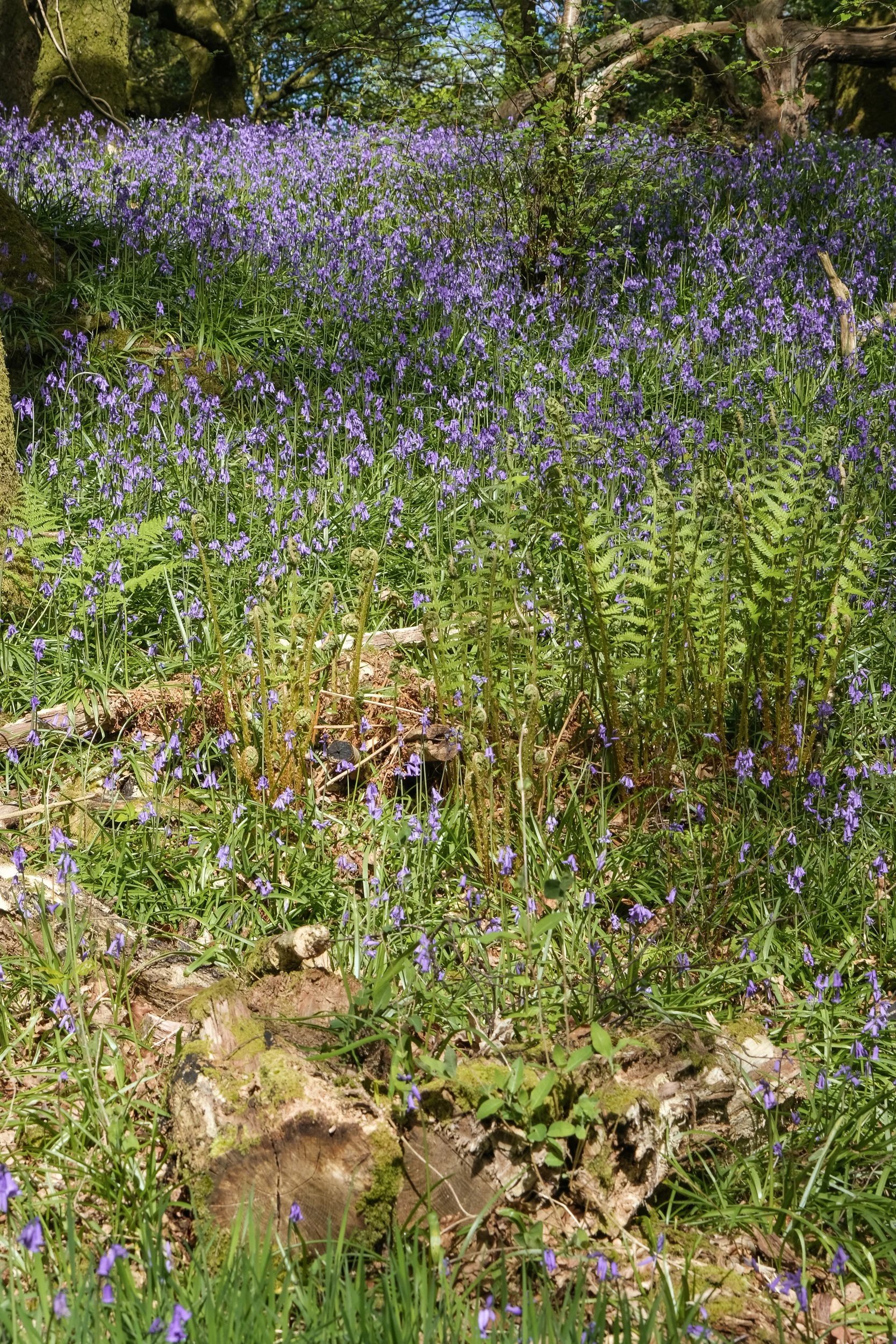
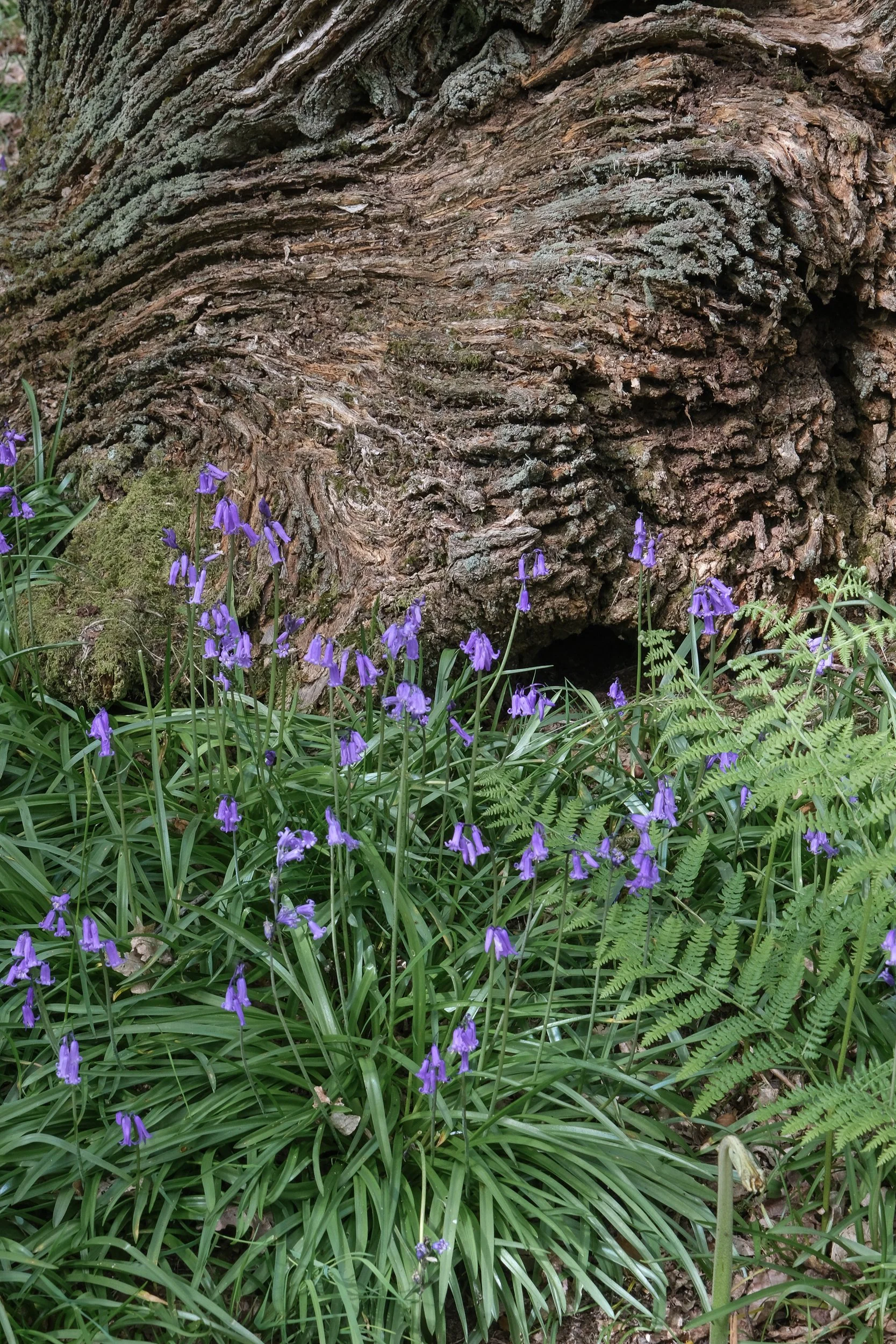
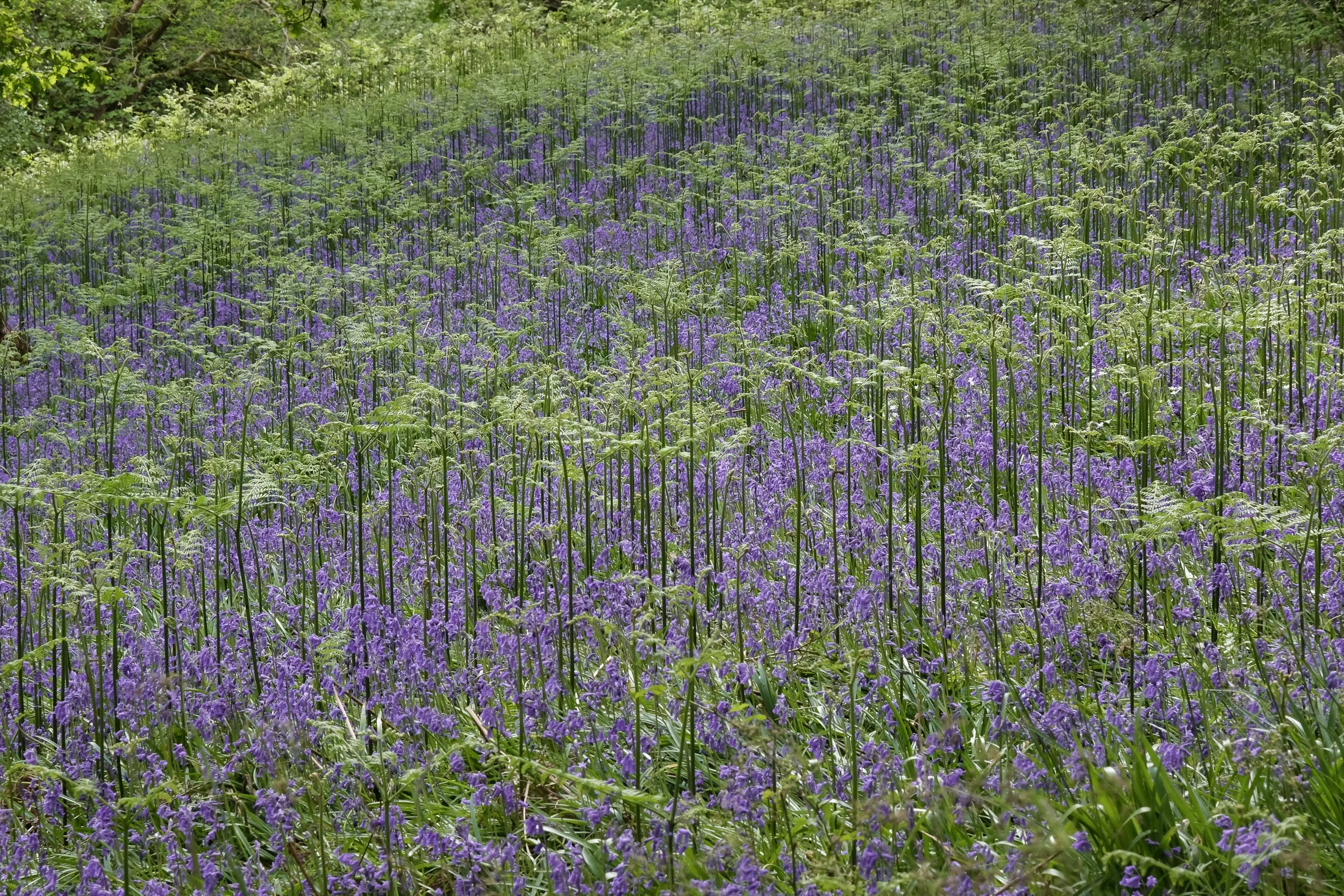
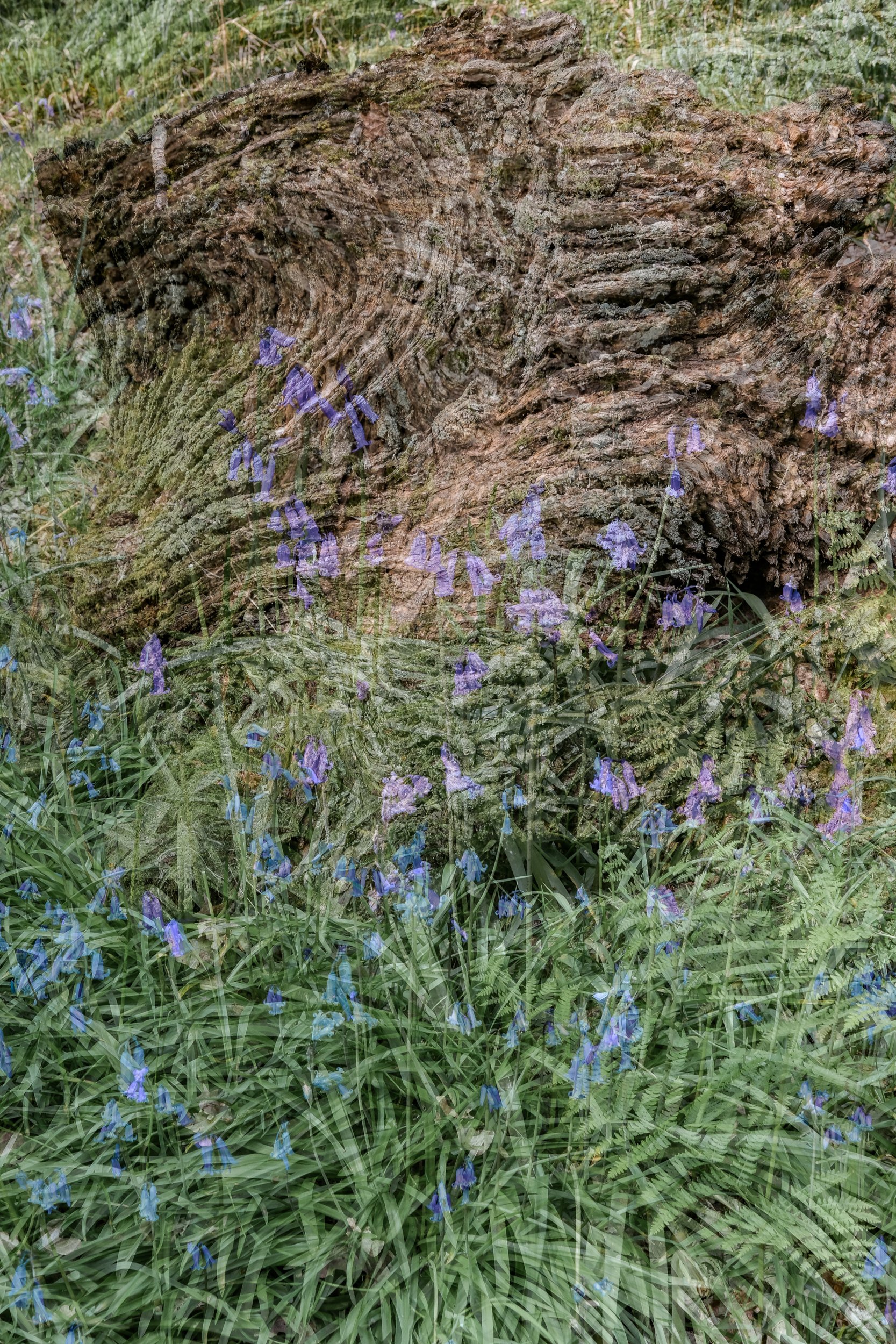
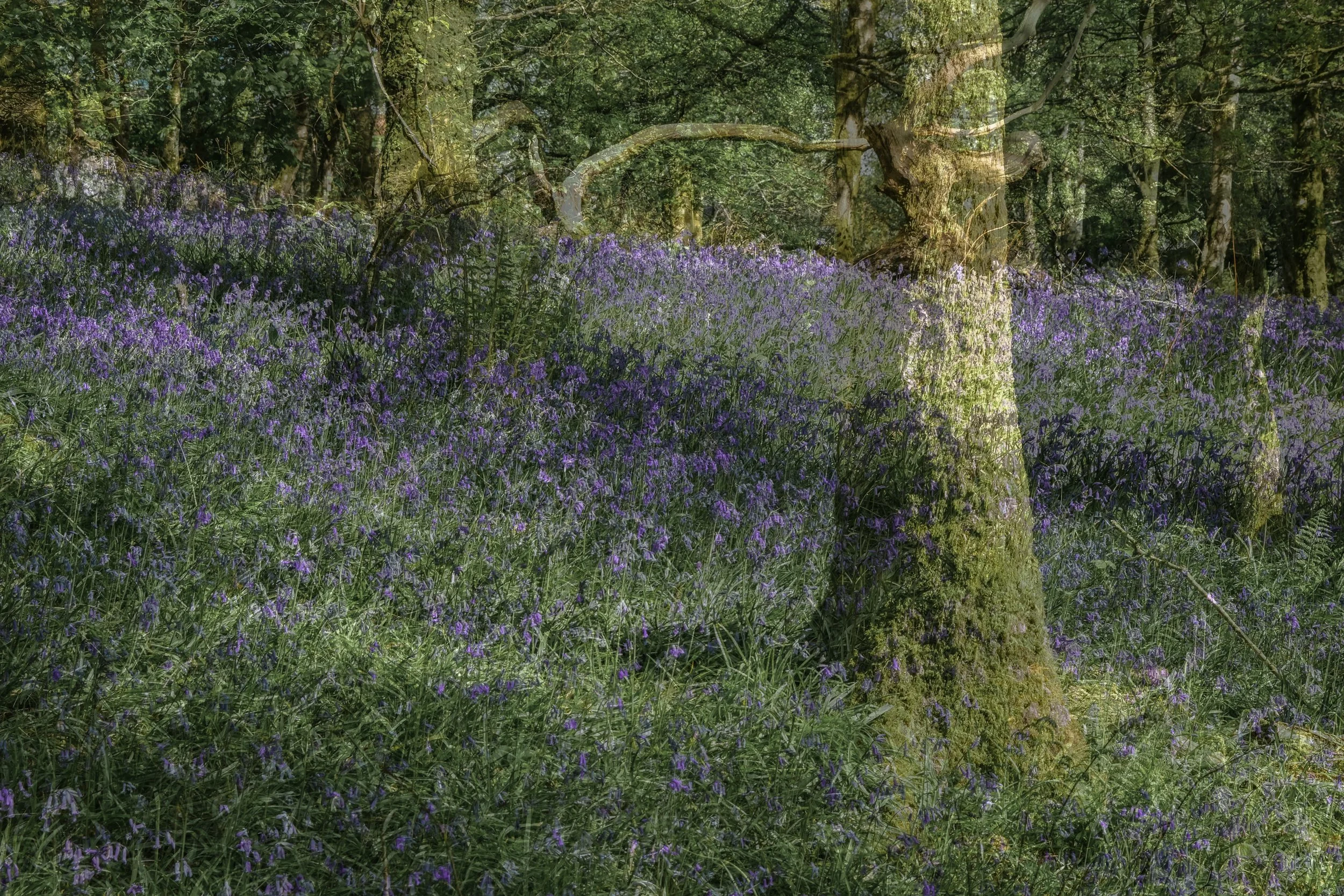
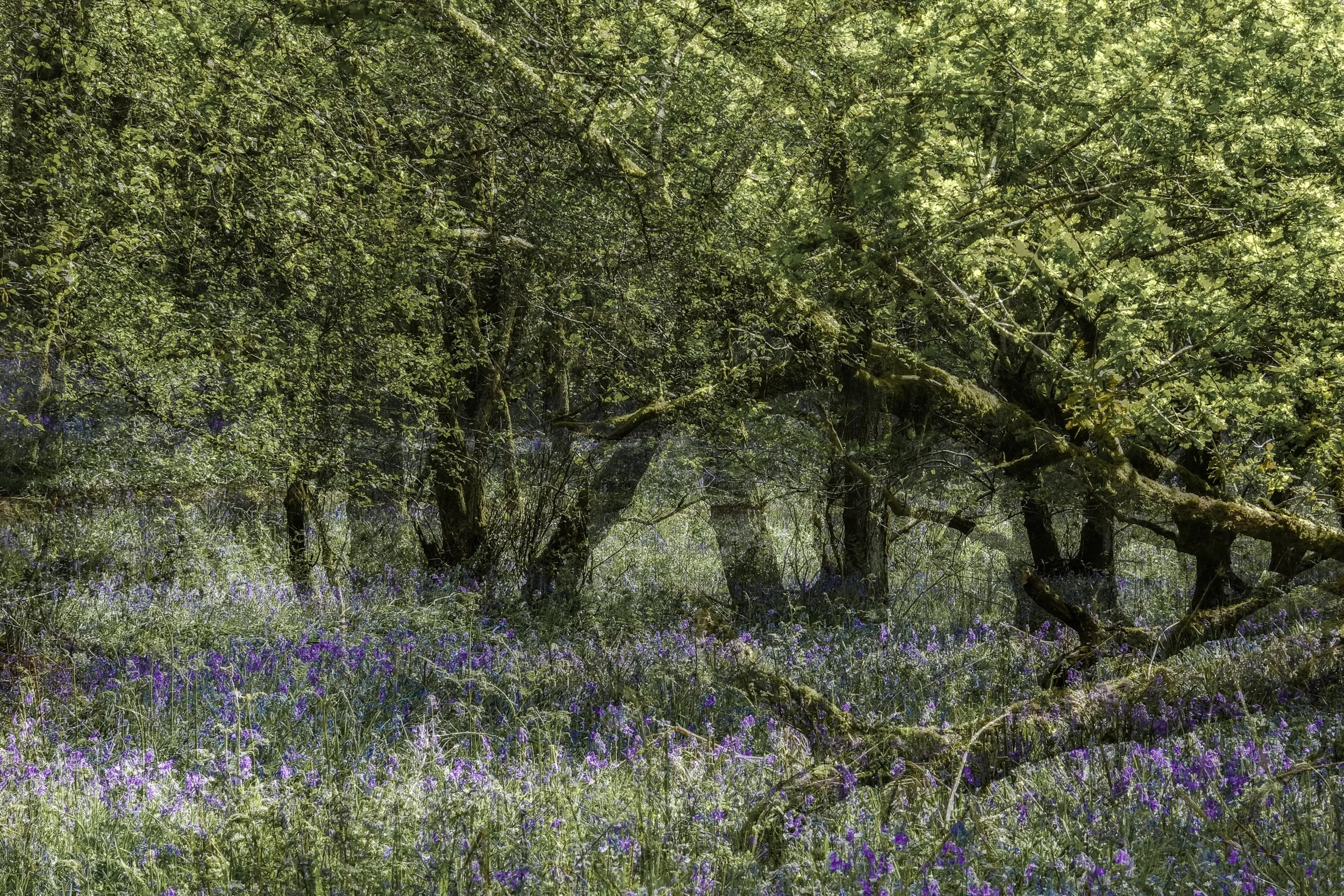
To stand alone, surrounded by bluebells, is not only to enjoy them in their natural environment but also to appreciate that in an ancient woodland such as this, there is much human history and even mystery steeped in folklore. Tales abound, some dark some joyous, of meetings with fairy folk, their presence sensed sometimes as kind but often as mischievous and always magical. For me there was a sense of something ethereal in the bluebell wood; it can’t be pictured or described but by using double and sometimes triple exposures for these last images, I tried to explore this mystical feeling. No fairies, just a benign sense of peace and calm prevailed.
Sources: Scottish Wild Flowers. Michael Scott. Pub: Birlinn 2011 The Secret Lives of Colour. Kassia St Clair. Pub: John Murray 2018
Woodlandtrust.org.uk